
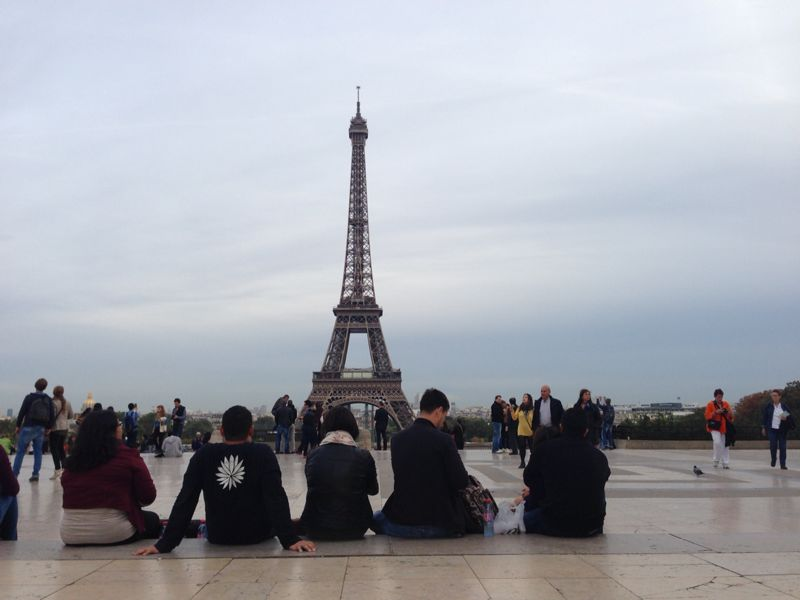

Group travel is often misunderstood.
It is frequently associated with scale—large itineraries, fixed schedules, uniform experiences designed to accommodate as many people as possible. In that model, efficiency becomes the priority. The traveler adjusts to the group, and the destination adjusts to the itinerary. There is comfort in structure, but little room for nuance.
Thoughtful group travel operates differently.
At its best, it is not about numbers. It is about alignment. A well-considered group is not assembled around convenience but around shared pace, shared curiosity, and a similar understanding of how one prefers to move through the world. When that alignment exists, the group enhances the journey rather than diluting it.
Traveling alongside others can create a distinct kind of depth. Conversations unfold differently when they are shaped by a shared environment. A meal becomes more than nourishment; it becomes exchange. A guide’s insight carries further when it is reflected through multiple perspectives. The presence of others can sharpen observation rather than distract from it, provided the group is cohesive and intentional.
This requires careful curation.
Not every destination lends itself to group exploration, and not every traveler thrives within a shared framework. The pacing must allow for independence as well as gathering. There must be space for solitude alongside structured experiences. When designed properly, group travel offers both—a rhythm that alternates between collective engagement and personal reflection.
Discretion remains essential. A group should never feel conspicuous. Movement should remain fluid, respectful of the places being visited and of the individuals within the group. The objective is not visibility but immersion, supported by preparation that anticipates logistics without over-directing experience.
Group travel, when approached with care, can create continuity beyond the journey itself. Shared experiences form connections that extend beyond a single itinerary. They create a sense of familiarity in unfamiliar environments and offer a quiet reassurance that one is not navigating alone.
The most successful group journeys do not feel like programs. They feel like gatherings—intentionally designed, carefully paced, and shaped by mutual understanding. They require more forethought, not less. And when that forethought is present, the experience becomes both expansive and personal at once.
In the end, group travel is not about assembling travelers. It is about assembling compatibility—and allowing that compatibility to deepen the experience of place.They walked out onto the deck. All the buildings and smoke had vanished, and the ship was in a vast expanse of sea, fresh and clear yet faint in the morning light.
They had departed from the city lying in the mud. A very thin silhouette stretched on the horizon, barely strong enough to support the weight of a distant city, which still lay upon it. They were free from paths, free from people, and a shared sense of liberation filled them all.